
Originally posted Saturday, July 07, 2012
That is the sort of thing that only happens in heaven. I think the facts I have stated will constitute an absolute answer to the particular set of nightmares which are usually felt by those who fear we shall be thrown into convulsions by American gold. — Winston Churchill
As noted elsewhere, Winston Churchill, was baffled and misled by the misguided experts of his day into resuming the gold standard at pre-war parity.
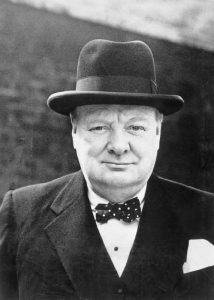
From his speech upon the subject, full of characteristically magnificent, if, in this case, badly misguided, eloquence:
May 4, 1925. House of Commons
When the present Opposition formed a Government, they formally expressed themselves in favour of a return to a gold standard at the earliest opportunity. The Prime Minister of those days – I have the quotations here, but I shall not trouble the House with them – announced that policy of carrying out the recommendations of the Cunliffc Committee, and returning to the gold standard at the earliest possible moment – and then the Chancellor of the Exchequer, the right hon. Member for Colne Valley (Mr. Snowden), went further and was even more explicit, not only in office but in opposition. He has repeatedly urged upon the Government that the right policy for this country is to return to the gold standard at the earliest possible moment.
My right hon. Friend the Member for Hillhead (Sir R. Home), in his most powerful and effective speech, a speech which might almost have relieved me of the duty of intervening at all in the Debate, dealt with the late Chancellor of the Exchequer, and quoted the article which he wrote, only two months ago, in the “Observer” newspaper, and he pointed out that not only had the right hon. Member for Colne Valley advocated a return to the gold standard, but he had pressed it as a matter of haste and urgency. He had pressed it as a matter so important that, to quote his words –
“Risks must be run for the sake of the benefits which success would bring. England could give a lead in this matter which would result in a general return to the gold standard”.
Well, Sir, we have taken the advice of the late Chancellor of the Exchequer, but we shall hardly be encouraged to repeat the experiment, having regard to the treatment we receive when we do fall in with his views. We have taken his advice, we are actually on the gold standard, and what does he do? Speaking with the full responsibility of the official spokesman of the Opposition in matters of finance, what is it he proposes that we should do? I quite recognise the moderation of his speech, the restraint and sobriety of all that he said on this subject, and on both sides of it. But what is the course which he recommends to the House of Commons this afternoon?
He proposes, now that we are on the gold standard, to deprive us of the precautionary measures and safeguards which, after long thought and patient preparation, we regard as vital to the success of the operation which he himself has counselled. Well, if you are looking for grounds of opposition, you can nearly always find some reasons, and so the blessed words “undue precipitancy” have been discovered to bridge the gap between the late Chancellor of the Exchequer’s past and the views which some of his supporters in his party hold at the present time.
Undue precipitancy! I understand the difficulties to which ex-Ministers and the leaders of a party in opposition are subjected. I wish to make every possible allowance for them, but I must say, speaking quite frankly, and, I hope, without offence, that this incident makes it difficult, not for the Government merely, but for the House, to place full reliance on the character of the advice given by responsible leaders of the Opposition in regard to grave and complicated matters of public policy. They advise a certain course publicly and repeatedly. We adopt the course, we take a decision in accordance with their advice, and then immediately they move an Amendment, not only to condemn us for what we have done, but to deprive us of those practical safeguards by which alone what we have done can be carried through successfully.
One may approve of the principle, one may even agree as to the urgency, and yet one may dislike the method. I heard nothing in the speech of the late Chancellor of the Exchequer which indicated any serious disapproval of the specific method we have adopted. It is a method which the highest experts have advocated. In carrying out the policy recommended by the late Chancellor of the Exchequer, we have taken every precaution which forethought, and patience, and long preparation could suggest.
Undue precipitancy! Where is the undue precipitancy in acquiring discreetly, over a considerable period of time, the 166,000,000 dollars required to cover our payments to the United States for the whole of this year? Where is the undue precipitancy when we began these arrangements with the United States, upon which these trans-Atlantic operations were founded, before Christmas last year? There never has been any step of this character taken by any Government which, so far from being marked by undue precipitancy, has been more characterised by design, forethought, careful and laborious preparation.
Mr. B. Smith: See the results.
Mr. Churchill: The late Mr. Bonar Law once, in reply to an interjection of that kind, made a very pertinent quotation, and said: It is no use trying to argue with a prophet. One can only disbelieve him.
Mr. Smith: I only said, Wait the results.
Mr. Churchill: There is perhaps one ground on which we might have been accused of undue precipitancy. I was waiting to hear the right hon. Member for Colne Valley, whom I am glad to see in his place, perhaps say that he would have approved of all that we had done but for the fact that, instead of declaring last week that we would return to the gold standard on the 31st December, we had in fact returned to it at the moment of my declaration. It is, of course, a question which requires careful balancing-whether you should give a long notice in advance, or whether you should act instantaneously by giving a general licence to the Bank of England to resume gold exportation.
I was advised that, if we had waited the eight months before the end of the year, before the expiry of the present Act, everyone would have had all that time to perfect arrangements for the export of bullion. Everyone during those months could under the existing law, have withdrawn and hoarded gold against the day when the free export of gold became lawful, and all this pent-up volume, which you could not measure, which might be very small, or might be very large, but, in any case, would have been uncertain, would have been awaiting the automatic cessation of the existing law, and would have fallen upon us on the 1st January, 1926. That is a season when the normal demand for dollars is high, a season usually unfavourable to our Exchequer, and at the unfavourable moment all this pent-up strain would have fallen upon our gold reserves. No one would have been able to predict what would have happened. Personally, I am not convinced that anything very serious would have happened, but there are many people who would have been alarmed, and these vague fears and uncertainties affecting the whole position of our trade and finance, would have been deeply detrimental to our material well-being.
If you are going to return to the gold standard, if that principle is to be carried into effect at all, now is, from every point of view, the moment which should be seized. This charge of undue precipitancy has enabled the right hon. Gentleman to present a consistent, or comparatively consistent, front, but his argument as to undue precipitancy runs counter to all the most solid reasons which the Government can produce. I must contrast the position of the right hon. Gentleman with the position of Mr. Keynes, who is, I suppose, by far the most distinguished and able exponent of the opposition to the return to gold. He is the great advocate of a managed currency, the most powerful and persuasive advocate. While the right hon. Gentleman opposite was writing in the “Observer” newspaper, articles demanding the return to gold –
Mr. Snowden: Not demanding.
Mr. Churchill: Advising or suggesting. While the right hon. Gentleman was writing in the “Observer” articles which might easily have been interpreted to mean that he was ready to approve of a return to the gold standard, urging that risks should be run, and that no time should be lost, Mr. Keynes was writing in the “Nation” a series of searching and brilliant articles, formidable and instructive, in favour of a managed currency. You could not have had a greater difference than was exhibited between the writings of the right hon. Gentleman and the articles of Mr. Keynes.
What has happened in the event? The right hon. Gentleman, who advocated a return to the gold standard at the earliest moment, when we return to the gold standard attacks us. But Mr. Keynes says:
“If we are to return to gold, and in the face of general opinion that is inevitable, the Chancellor and the Treasury and the Bank have tried to do so along the most prudent and far-sighted lines which are open to them”.
That is the statement which was made by, I say, the most able, most powerful opponent of the return to gold. Here is the right hon. Gentleman, who is one of the strongest advocates of the return to gold, confronted with the same facts as Mr. Keynes, accusing the Government of undue precipitancy.
Mr. Snowden: May I also quote this from Mr. Keynes:
“There remains, however, the objection, to which I have never ceased to attach importance, against the return to gold, in actual present conditions, in view of possible consequences and the state of trade”.
Mr. Churchill: Certainly, I say he is the most capable exponent of the opposite view, and absolutely disagrees with the right hon. Gentleman on the principle. And yet, so fair-minded is he in judging this matter, that, apart from the principle, if you are going to do it, he says this is much the best way. What is the explanation of the difference between the two? The explanation is that the right hon. Gentleman, unlike Mr. Keynes, has to consider party manoeuvres and party exigencies, and it is not thought prudent, in regard to a matter of this kind, about which many people entertain conflicting views, that the official Opposition should take up any attitude which, if unsatisfactory results accrued in the future, would prevent them from being able to say, “I told you so.”
The right hon. Gentleman is really in an excellent position. He is, in sporting parlance, “standing on velvet.” If everything goes successfully, and no evil consequences arise, not even temporarily; if there are no spasms of any kind, he will be able to say, “Ah! we were always in favour of the return to the gold standard; the Labour party in office declared itself strongly in favour of it.” If, on the other hand, there should be, in some few months’ time, some spasm or some stringency, and momentary agitation is raised in the Press, he will again be able to rise in his place, or write another article in the “Observer,” saying that he had foretold it.
Let us see what would happen if the official Labour Amendment were carried. We should find ourselves deprived of every effective means of making the transition safe. We should not be able to secure the credits in the United States which are intended to warn off speculators-in the excellent phrase Lord Oxford used last week, to “warn off the international banditti of finance” from making attempts to overturn our gold standard. If we were left unprotected, and such attempts succeeded, we should have to make very heavy shipments of gold, and we should certainly have to raise the Bank rate.
At the very time that we were exposed to this strain, we should, if the Amendment now before the House were carried, have to pay out sovereigns from the gold reserves to everyone who chose to ask for them, and, in order that there should be no risk of a shortage, the Mint would be under an obligation of minting into sovereigns all gold tendered to it. I can understand condemning the principle of a return to gold, but to approve the principle, and then to leave this country defenceless in a vital matter of this kind, when it is already committed, is a course which I am quite sure very few responsible Members in this House will care to support in the Lobby. I do not know whether there will be a Division or not on this issue. If there is, well and good, but if there should be no Division, on the whole, possibly, some national, apart from party, advantage would be gained thereby.
No doubt it is a serious matter for a Minister and a Government to have to take the responsibility for a Measure of this kind. I will tell the House quite simply on what authority I base myself, and what reasons have influenced me. I do not pose as a currency expert. It would be very absurd if I did; no one would believe me. I present myself here, not as a currency expert, but as a Member of Parliament with some experience in dealing with experts and weighing their arguments, as the Minister who has behind him what, I believe, is, and what, I daresay, the right hon. Gentleman believes is, upon the whole the finest expert opinion in financial matters, in Treasury matters, in the whole world. We have behind us the unbroken opinion of every Government while it was responsible. We have every Prime Minister and every Chancellor of the Exchequer, except, with some recent modification, the right hon. Gentleman. We have every Committee and every Conference that has been held since the War. We have the Currency Committee’s Report, which has been available for several days in the Vote Office, and gives all our general reasons.
That is the basis and the foundation on which we rely, not only as regards the principle, but generally as regards the method. Apart from the principle, I had to rely on the best expert advice I could get as to method and time. The advocates of a managed currency say: “Why do you not continue to manage the currency? See how successful it has been. See how well it has been done. Why do you not continue a managed currency?” I agree that the experts at the Treasury and the Bank of England who have managed the currency during the past few years have been wonderfully successful. This is all the more remarkable, because those years have been years of violent political fluctuation and disturbance, in spite of which they have managed to steer a steady course, maintain a fairly stable financial policy, and promote and enhance British credit.
That is a great achievement. But surely the experts, to whom this achievement belongs, must be very high authorities on the subject. Surely they are the people who ought to know most about it. Surely their opinion counts more than the clever arguments of academic theorists or the interested attitude of party politicians. I, as Minister, and the Government take full responsibility. I am not setting our opinion up, but I am saying we are right to be guided by the statements of opinion we have received from them. Surely if you can rely upon a body of expert opinion which has actually conducted financially the affairs of this country with success, and tendered advice to their Ministers-a long and changing succession of Ministers-you are entitled to base yourself with real assurance upon the advice you receive from them. When the men who have managed the currency so well, according to the opponents of the present Bill, tell me that they can manage the currency no longer upon this basis, and tell me it would have been impossible to have managed it so far as they have unless they had always had the return to the gold standard as a goal to steer towards, and that if we were now to repudiate the gold standard, and introduce legislation for the purpose of prolonging the embargo, an immense injury would be done to the whole structure of British finance, surely their opinion should carry great weight. That is the advice upon which I have to rely, and to which I am bound to pay the greatest attention.
I have endeavoured, of course, to the best of my ability to think out the problem for myself, and I will give the House a few non-technical reasons why I think we are bound to take this step and take it now and take it in this particular way. The first of these reasons is the position of this crowded island, which could not support its present population by the unaided exertions of its agriculture, its manufactures, or even its shipping, unless these exertions were supplemented by the world-wide interests of this country in finance and business. The great working-class population such as we have here requires, above all things, and our economic problem requires, above all things, close and continuous contact with reality. There is no country in the world that can less afford to see its policy diverge from economic facts than our own. If we tried, whatever Government was in power, to inflate our currency or credit in order to produce hectic expansion not warranted by underlying facts, the consequence of that action would be widespread misery among the population and probably lasting injury, perhaps even fatal injury to the structure of our trade.
We are often told that the gold standard will shackle us to the United States. I will deal with that in a moment. I will tell you what it will shackle us to. It will shackle us to reality. For good or for ill, it will shackle us to reality. That is the only basis upon which we shall be standing, and I believe it to be the only basis which offers any permanent security for our affairs. That is my first broad reason. The foundation of Great Britain’s economic policy must be, as far as possible, based upon reality.
Now the second reason is one which I think the Labour party, the official Opposition, might consider. We are not a self-supporting country. We have this immense working-class population. We have a population twice as dense as that of France. These people are dependent mainly on overseas food and our industries are dependent on overseas raw material. What is one of their principal interests? It is surely stability of prices. When prices fluctuate violently, as in the year 1919, and when, as in 1920, there is a slump, the real wages of the work-people are continuously affected and almost every step in the wage movement either up or down is attended by industrial fighting. This fighting wastes an enormous quantity of wealth, and injures the whole community.
On the whole, when there is inflation and undue expansion, I believe it to be true that wages follow with somewhat slower footsteps the swiftly rising scale of prices. Great disadvantage is caused in such circumstances by the decline in the value of money. Great strikes occur in the process of adjustment. Then when prices fall, another set of quarrels begins, and serious wage reductions are demanded which it is regarded as a point of honour to resist. There, again, you get friction, disturbance and sometimes the long arrest of production in important industries. Some fluctuations are perhaps inevitable, but we must reduce them to the minimum. We should endeavour to keep as steady a level of prices as possible, and we are far more likely to get that steady level if we are not drawn into over-trading and inflation, and we regulate our arrangements by one common standard of value. Therefore, I say that what is wanted in the general interest of the wage-earning classes of this country is a steady, trustworthy, honest, and, if possible, uniform standard of value.
What is my third reason? We are not only the financial centre of the world; we are also the centre of a wide Empire. If we detached ourselves from the great self-governing Dominions, which are nations in themselves- the unique glory of this country, the like of which no other nation has been able to show if we detach ourselves from their movements, we run the great risk of becoming isolated and loosening those bonds, the continuance and the fortification of which are indispensable to our well-being.
Canada is already linked to the gold standard. South Africa, independently of us, was about to return to the gold standard. I received in the last few months frequent inquiries from Australia as to what is our position, and indicating what were their desires. If we had shown ourselves incapable of taking up any position at all, the self-governing Dominions of the British Empire might have gone on to the gold standard by themselves, and the Mother Country alone would have been left to pursue a different policy. They would all have traded together, and the inconvenience they suffered by reason of the conditions of exchange would have been swept away, as far as they themselves were concerned. Australia would have traded with South Africa and all the Dominions would have traded with the United States of America on a gold basis, and it would have been a gold basis with the pound left out; it would have been gold on the basis of the dollar, not of the pound, and we should have been left on a different foundation. That would have been a condition of affairs disastrous from every point of view.
The same is true of foreign countries with which we deal. We have immense dealings with them, and we must have greater dealings with them if our prosperity is to revive. If the English pound sterling is not to be anchored to the standard which everyone knows and can trust, and which everyone in every country understands, and can rely upon, the business, not only of the British Empire, but of Europe as well, might easily have come to be transacted in dollars instead of in pounds sterling. I think that would be a great misfortune, a misfortune which, if once incurred, might continue. Those are the three great reasons, economic, social and Imperial, which convinced me that we should return without delay to an international gold standard.
We are told, in the first place, that the gold standard will be injurious to us, because America is in favour of it. It is quite true that the universal or widespread adoption of the gold standard will be of great advantage to the United States, but, as my right hon. Friend pointed out, it by no means follows that because it is an advantage to the United States it will not be an advantage to us. The great free trade economist Bastiat, in a celebrated sentence, declared that all legitimate interests were in harmony, and I see no reason why what benefits the United States should not perhaps benefit us in our special needs as much or even more.
We are told that the gold standard will put us in subjection to the United States, that we shall be shackled to them, and that we shall be bound hand and foot, and forced to conform to the course of their affairs. We are reminded that the United States have £800,000,000 of gold, half the supply of the whole world. They have at present, in the Federal Reserve Banks, 000,000,000 above their requirements. Naturally we are told that if she is to use this gold, her interest is to make it as available and potent as possible. Naturally she will help us to make it the dominant standard of value. I think that is a fair statement of the argument.
What is there to say on the other side? First of all, whether we go on the gold standard or not, our interests are profoundly and intimately involved in those of the United States, which is larger than we: in some respects she is richer than we are. The two great communities are woven together by a thousand ties of trade and finance. We pay every year our £35,000,000 of war debt to the United States, but that is a small part of our mutual transactions. We have to buy from the United States the greater part of our cotton, tobacco and a large proportion of our raw materials and wheat. We purchased last year £240,000,000 of goods from the United States. Whether on a gold standard or on a managed currency or on any other scheme which can be conceived, her fortunes arc bound to sway and influence ours whenever she booms or slumps.
Before the War or after the War, whatever we do, our prosperity was and is bound to be affected by conditions across the Atlantic Ocean. Therefore it is not a question of whether the return to a gold standard makes us dependent on the United States, but whether it makes us more dependent or dependent in an unhealthy and a subservient manner.
I think that the answer to that question depends on another. Shall we ourselves be stronger on the gold standard or off it? If that great entity of the British Empire united on this gold standard will be stronger, then we shall be in a better position to hold our own in regard to the strong influences which will sweep across our affairs from the other side of the Atlantic. We are already very strong. In spite of all our war burdens and the immense exertions we and the exhaustion that followed upon it, we have managed to maintain London as the financial centre of the world. We have the control of a vast amount of the world’s business. We have a magnificent credit to which all parties in this House have contributed. We have still, it is calculated, £3,000,000,000 of foreign investments, the interest on which is calculated at about £220,000,000 a year. Even in gold reserves the position of the British Empire is impressive. We have £153,000,000 here and £107,000,000 is held by the Dominions.
Then, also, the British Empire is the main source of the world’s gold supply. £60,000,000 of gold a year, or 70 per cent, of the whole supply of the world, comes from under the British (lag. Britain and her Dominions, standing together united, are an enormous power, a power so great, so intricate, so comprehensive that it is strong enough to exist side by side in an amicable association with even a larger economic and financial Power, without being prejudicially affected in its own essential independence. In this way it is true, I think, to say that the interests of Britain are not dependent upon the United States, but that the interests of both countries are interdependent.
Let me deal with another of the elements of doubt which have arisen. We are told of the £300,000,000 of surplus gold that are lying in the vaults of the United States. No doubt that gold will not move physically to any large extent. But it is possible that, as a result of the wide adoption of the gold standard in this and other countries, that this gold, which is now inert, will gradually become active. This gold will gradually serve as the foundation of credit in many parts of the world. If that is so, there will ensue a slow, gradual, healthy and perfectly legitimate expansion of credit all over the world. We may enter upon a period similar to that which we passed through in the “nineties,” when, without any violent fluctuations or improper inflation, there was a general broadening of credit due to the discovery of the gold-fields of South Africa.
It makes no difference whether the gold is 4,000 feet below the surface of the Rand, or 40 feet below the surface in the vaults of the Federal Reserve Bank. It might well inaugurate a period of healthy expansion during which every one would be kept in check by continuous reference to the same standard of value. It is quite a different process to those processes of inflation caused by setting the printing press to work to multiply the paper currency, or by increasing the Floating Debt by selling Treasury Bills. It is a process founded on solid facts, and related at every stage. I do not care to prophesy whether such a change will take place or not. If it takes place it will certainly be accompanied by a gradual increase in the consuming power of every branch of the world’s trade.
Then we are told that this gold may come here in large quantities. We may be “flooded with gold” as the right hon. Gentleman the Member for Colne Valley says. That is not precisely the problem that has most occupied the minds of my advisers during recent months. In his carefully balanced speech on both sides of the question, the right hon. Gentleman contrived to throw doubts on our policy, first of all by intimating how easily we might be thrown into inconvenience by a drain of gold, and, secondly, how easily we might be thrown into inconvenience by being flooded with gold. It is suggested that if gold became a plethora here, and is discharged upon us in quantities which we could not properly absorb, prices would be forced up, and we should have a serious economic situation.
Such a situation, however fantastic, however unlikely to arise, would leave us perfectly cool. The right hon. Gentleman asked: Why have we not suspended the obligation of the Bank of England to buy unlimited gold at a fixed price? Why? If you are to maintain stability, you must resist disturbing influences from both sides. Stability is equally deranged by a too high exchange as well as by a too low exchange. It is essential that the bank should operate as a balancing instrument both ways-to buy gold when it is tendered, to deliver gold when it is demanded, always at a fixed, known, and previously declared price. In this way alone can we create a financial pivot on which the whole process of stabilisation will revolve.
We are in this country in a position, alone among the countries of the world, to have no need to fear a violent flooding with gold. By a judicious and far-seeing provision inserted in the American Debt Settlement-a settlement to which I think the right hon. Member for West Swansea (Mr. Runciman) referred earlier in the Session-we have a right to pay off the principal of our debt to the United States at any time in gold. If, therefore, gold made its appearance in this country in inconvenient quantities, and tended to drive prices up, all the Treasury would have to do would be to float an internal loan, purchase the gold, and remit it to the United States in cancellation of the War Debt. At every stage we should gain in this transaction. We should be paying off our debt by the most advantageous method, and we should be substituting an internal debt for a vastly more burdensome overseas external debt.
I do not, however, think there is any chance of this sort of thing happening. That is the sort of thing that only happens in heaven. I think the facts I have stated will constitute an absolute answer to the particular set of nightmares which are usually felt by those who fear we shall be thrown into convulsions by American gold. We have inexpugnable means of defence if such a situation arose. But where will the gold, or the credit founded upon it, go if it be released from the United States in future years?
It will go, as we believe, to European countries and other parts of the world, and in so far as it operates there, it will tend to set them on their legs again. They will, of course, be more intimately associated with the United States in consequence of their loans, but a general revival is what we have to base ourselves upon. A general revival of consuming power all over the world is the hope that this country must cherish. That growth of consuming power internationally is bound to react favourably upon us. We cannot live without exports to the markets of the world.
Recent Comments