
Originally posted Thursday, July 05, 2012
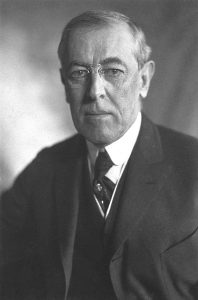
When the first governors of the Board complained to the president that the State Department expert on protocol had decided that as the most recently created of the government agencies, they should come last in social precedence, (Woodrow) Wilson had replied that as far as he was concerned, “they might come right after the fire department.”
Immediately after World War I, things began to go badly wrong in reestablishing a world financial order. According to Liaquat Ahamed’s Pulitzer Prize winning The Lords of Finance (The Penguin Press, New York, 2009)
After the war, there was a universal consensus among bankers that the world must return to the gold standard as quickly as possible. The almost theological belief in gold as the foundation for money was so embedded in their thinking, so much a part of their mental equipment for framing the world, that few could see any other way to organize the international monetary system.” (p. 156)
That is not, of course, what happened.
Keynes was the first to recognize and articulate that, for all the public rhetoric about reinstating the gold standard, the new arrangements were in fact very different from the hallowed and automatic prewar mechanism. As he put it in the Tract, “A dollar standard was set up on the pedestal of the Golden Calf. For the past two years, the US has pretended to maintain a gold standard. In fact it has established a dollar standard.”
It meant, in effect, that the Federal Reserve was so flush with gold that it had gone from being the central bank of the United States to being the central bank of the entire industrial world. Keynes’s main concern was that Britain and other major European countries would find themselves being dictated to by a Fed that focused primarily on the needs of the domestic U.S. economy, yoking the gold-starved Europeans to U.S. credit policy. (Benjamin) Strong was in the process of constructing a one-legged gold standard, whose European limb would be firmly tied to classical rules while the American limb would be run by the Fed according to its own set of goals and constraints.
Keynes would have been even more horrified had he probed further into how the Fed operated and the character of the men who ran it. The Federal Reserve Act of 1913 had been a political compromise. Decisions about the level of interest rates and credit conditions sere vested in the hands of the twelve banker-dominated regional reserve banks. This network was overseen by an eight-member central Board of Governors, all presidential appointees based in Washington. Broadly speaking, only the reserve banks could initiate policies, but these policies had to be approved by the Board.
It was not surprising that there should have been a certain amount of jockeying for control within the system. The precise locus of authority was ambiguous, and too many big egos–twelve governors of the reserve banks, the six political appointees on the Federal Reserve Board; the secretary of the treasury and the comptroller of the currency, both ex-officio members of the Board–were jostling for power.
From the start, the Board in Washington was an organization of unclear purpose and mandate. When it was created in 1913, Wilson conceived of it as a regulatory agency standing as a watchdog over the various regional reserve banks. He believed, therefore, that it should be comprised of individuals from outside banking. But he was unwilling to give it much stature. When the first governors of the Board complained to the president that the State Department expert on protocol had decided that as the most recently created of the government agencies, they should come last in social precedence, (Woodrow) Wilson had replied that as far as he was concerned, “they might come right after the fire department.” (p. 172)
Recent Comments