
Originally posted on Saturday, March 10th, 2012
An urban legend attributes to Albert Einstein a declaration that compound interest is the most powerful force in the universe.
Right thought. Wrong source.
As author Sylvia Nasar notes in her lovely Grand Pursuit: The Story of Economic Genius (Simon and Schuster, 2011) it was a core insight of social philosopher, humanitarian, key founder of modern, neoclassical economics — and proto-Supply Sider– Alfred Marshall, who:
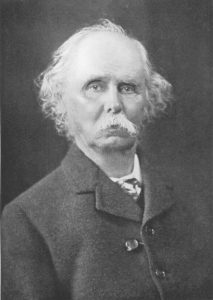 Alfred Marshall, courtesy of Wikipedia
took great pains to demolish Socialists’ claim that but for oppression by the rich, the poor could live in ‘absolute luxury.’ … In fact, an absolutely equal division of Britain’s annual income would provide less than ?37 per capita. Reducing poverty required expanding output and increasing efficiency; in other words, economic growth.
The chief error of the older economists, in Marshall’s view, was to not see that man was a creature of circumstances and that as circumstances changed, man was liable to change as well. The chief error of their critics — but, ironically, one that the founders of political economy shared — was a failure to understand the cumulative power of incremental change and the compounding effects of time.
“‘There are I believe in the world few things with greater capability of poetry in it than the multiplication table…If you can get mental and moral capital to grow at some rate per annum there is no limit to the advance that may be made; if you can give it the vital force which will make the multiplication table applicable to it, it becomes a little seed that will grow up to a tree of boundless size.’ (p. 65)
What has this to do with the gold standard? In a way, everything.
As site advisor Charles Kadlec wrote, as August,The Price of Abandoning The Gold Standard, in Forbes.com:
“Since Nixon killed the gold standard the unemployment rate has averaged over 6% and we have suffered the three worst recessions since the end of World War II. The unemployment rate averaged 8.5% in 1975, almost 10% in 1982 and has been above 8.8% for more than two years, with little evidence of any improvement ahead.
“This performance is horrendous compared with the post-World War II gold-standard era, which lasted from 1947 to 1970. During those 21 years of economic ups and downs the unemployment rate averaged less than 5% and never rose above 7%. Growth, too, has slowed. Since 1971 real economic expansion has averaged 2.9% a year–more than a full percentage point slower than the 4% growth rate during the post-World War II gold-standard period.
“When compounded over 40 years, 1% slower growth under the paper dollar system has had a mind-boggling impact on our incomes and the size of the economy. At 3% growth the U.S. economy is about $8 trillion smaller than it would have been had we continued to experience the average growth rate prior to Nixon severing the link between the dollar and gold. That implies that median family income today would be about $70,000, or nearly 50% higher than it is today. [Emphasis supplied.]
Recent Comments