
Originally posted on Thursday, August 1st, 2013
“ARISTOPHANES,”
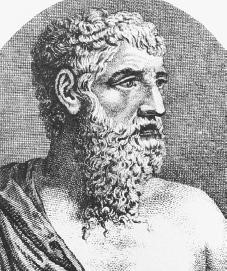
says the Harvard Classics, was “the greatest of comic writers in Greek and, in the opinion of many, in any language, is the only one of the Attic comedians any of whose works has survived in complete form. He was born in Athens about the middle of the fifth century B. C. …
“The Frogs” was produced the year after the death of Euripides, and laments the decay of Greek tragedy which Aristophanes attributed to that writer. It is an admirable example of the brilliance of his style, and of that mingling of wit and poetry with rollicking humor and keen satirical point which is his chief characteristic. Here, as elsewhere, he stands for tradition against innovation of all kinds, whether in politics, religion, or art.”
From the Harvard Classics edition, from The Frogs, on monetary integrity:
| Often has it crossed my fancy, that the city loves to deal | |
| With the very best and noblest members of her commonwealth, | 720 |
| Just as with our ancient coinage, and the newly-minted gold. | |
| Yea, for these, our sterling pieces, all of pure Athenian mould, | |
| All of perfect die and metal, all the fairest of the fair, | |
| All of workmanship unequalled, proved and valued everywhere | 724 |
| Both amongst our own Hellenes and Barbarians far away, | |
| These we use not: but the worthless pinchbeck coins of yesterday, | |
| Vilest die and basest metal, now we always use instead. | |
| Even so, our sterling townsmen, nobly born and nobly bred, | 728 |
| Men of worth and rank and mettle, men of honourable fame, | |
| Trained in every liberal science, choral dance, and manly game, | |
| These we treat with scorn and insult, but the strangers newliest come, | |
| Worthless sons of worthless fathers, pinchbeck townsmen, yellowy scum, | 732 |
| Whom in earlier days the city hardly would have stooped to use | |
| Even for her scapegoat victims, these for every task we choose. | |
| O unwise and foolish people, yet to mend your ways begin; | |
| Use again the good and useful: so hereafter, if ye win | 736 |
| ’Twill be due to this your wisdom: if ye fall, at least ’twill be | |
| Not a fall that brings dishonour, falling from a worthy tree. |
Recent Comments