
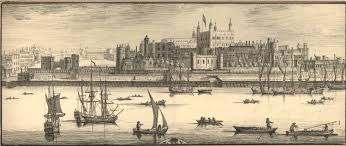
The Royal Mint moved from the Tower of London to new premises c.1809
Originally posted on Thursday, June 5th, 2014
Wikipedia gives us a glimpse of the picturesque history of the British Royal Mint, where Sir Isaac Newton created, de facto, the modern classical gold standard that was to well serve the world for nearly 200 years:
The London Mint first became a single institution in 886,[citation needed] during the reign of Alfred the Great, but was only one of many mints throughout the kingdom. By 1279 it had moved to the Tower of London, and remained there the next 500 years, achieving a monopoly on the production of coins of the realm in the 16th century. Sir Isaac Newton took up the post of Warden of the Mint, responsible for investigating cases of counterfeiting, in 1696, and subsequently held the office of Master of the Royal Mint from 1699 until his death in 1727. He unofficially moved the Pound Sterling to the gold standard from silver in 1717.
By the time Newton arrived, the Mint had expanded to fill several rickety wooden buildings ranged around the outside of the Tower. In the seventeenth century the processes for minting coins were mechanised and rolling mills and coining presses were installed. The new machinery and the demand on space in the Tower of London following the outbreak of war with France led to a decision to move the Mint to an adjacent site in East Smithfield. The new building, designed by James Johnson and Robert Smirke, was completed in 1809, and included space for the new machinery, and accommodation for the officers and staff of the Mint.
Recent Comments