
Originally posted on Tuesday, March 19, 2013
Share
“Don’t be a schmuck. Don’t fall for fantastical notions that have nothing to do with the way people really are.” — Richard Fisher, quoting David Brooks
Richard Fisher, President and CEO of the Federal Reserve Bank of Dallas, presented trenchant, and important, remarks before Columbia University’s School of International and Public Affairs on February 27, 2013.
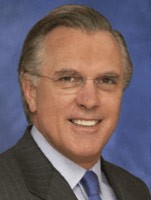 Photo Courtesy of the Federal Reserve Bank of Dallas
“As a member of the team of earnest men and women who form the Federal Open Market Committee (FOMC), I consider myself a central banker who has been mugged by the reality of
having been an investor and market operator. I am constantly wary of fantastical notions that seem cogent in economic or monetary theory but run counter to what I learned in the marketplace or run the risk of departing from practice in the real economy—of possibly having nothing to do with the way people and businesses, those who actually operate our economy, really are.”
Monetary Policy and Quantitative Easing
I have argued against what I have called “Buzz Lightyear” monetary policy—pledging to hold the federal funds rate at zero seemingly to infinity and beyond, while purchasing longer-term Treasury securities at a pace of $45 billion per month, reinvesting principal payments on all agency debt and agency mortgage-backed securities (MBS) and purchasing MBS at a pace of $40 billion per month.5 Indeed, other than our initial program to underpin a recovery in the housing market with our initial tranche of purchases of MBS, I have opposed all other large-scale asset purchases or quantitative easing (QE) programs. Why have I been so obstinate in my opposition to this well-intended program?
I fully understand its theoretical underpinnings. But I question its efficacy.
Confined as the Fed is at the “zero bound,” the only means of adding monetary fuel to the economy has been to purchase Treasury and MBS securities. When we buy something, we pay for it, putting money into the economy. That money—backed by an assurance that the FOMC will hold interest rates at zero and continue large-scale asset purchases for a prolonged period— should, theoretically, be put to use: a) by banks’ lending to consumers and to businesses that will expand employment, or b) by investors who, rediscounting valuations in the fixed-income and equity markets, will drive those markets higher in price, creating a “wealth effect.” This wealth effect should lead to further consumption as well as greater employment by businesses whose balance sheets have been reconfigured and enriched both by the cheapest leverage in American history and by booming prices for their stock.
All these actions are in keeping with the dual mandate that the Federal Reserve was given by the Congress of the United States. It calls for us to operate independently both to maintain price stability and conduct policy in a way that engenders full employment. Given that inflation and, importantly, inflationary expectations are presently “contained,” it would seem theoretically compelling to pursue the policy that we have undertaken.
But a not-so-funny thing has happened on the way to the reality forum. While bankers and other sources of credit have slowly but consistently liberalized their lending practices, borrowers have not been especially keen to put cheap and super-abundant credit to use in expanding payrolls to the degree the FOMC desires.
As I walked down memory lane in preparation for this lecture today, I thought of my days at business school in the mid-1970s. Everything we learned in business school was oriented toward operating and growing companies under the assumption of constrained, conservative debt markets and a fundamentals-driven equity market. Today, the opposite obtains: Credit is super- abundant and stock market behavior is conditioned not so much by the fundamental performance of its underlying companies but by increasing doses of monetary Ritalin.7 Against this backdrop, I am not surprised by the reaction of businesses. Operating in a highly uncertain environment, it is eminently sensible for them to defensively use their newly strengthened balance sheets to buy back shares and pay out dividends or employ them offensively in ways—say, in making acquisitions—that often lead to employee rationalization, not payroll expansion for U.S. workers.
This is how businesses really think; this is the way people really are.
Or, in really plain language very becoming to a high Federal Reserve official, as Fisher’s introduction to his remarks held:
I was especially captivated by Irving Kristol. His book, Two Cheers for Capitalism, praised capitalism because, one, “it works, in a quite simple, material sense;” and two, it is “congenial to a large measure of personal liberty.” Kristol famously described himself as “a liberal who had been mugged by reality.” In writing a loving homage to Kristol when he died, David Brooks of the New York Times summarized the basis for Kristol’s epiphany in more colorful language. “The elemental Jewish commandment” in the working-class neighborhood where Kristol grew up was: “Don’t be a schmuck. Don’t fall for fantastical notions that have nothing to do with the way people really are.”
From the Federal Reserve Bank of Dallas’s website:
Richard W. Fisher assumed the office of president and CEO of the Federal Reserve Bank of Dallas on April 4, 2005. In this role, Fisher serves as a member of the Federal Open Market Committee, the Federal Reserve’s principal monetary policymaking group.
Fisher is former vice chairman of Kissinger McLarty Associates, a strategic advisory firm chaired by former Secretary of State Henry Kissinger.
Fisher began his career in 1975 at the private bank of Brown Brothers Harriman & Co., where he specialized in fixed income and foreign exchange markets. He became assistant to the secretary of the Treasury during the Carter administration, working on issues related to the dollar crisis of 1978–79. He then returned to Brown Brothers to found their Texas operations in Dallas.
In 1987, Fisher created Fisher Capital Management and a separate funds-management firm, Fisher Ewing Partners. Fisher Ewing’s sole fund, Value Partners, earned a compound rate of return of 24 percent per annum during his period as managing partner. He sold his controlling interests in both firms when he rejoined the government in 1997.
From 1997 to 2001, Fisher was deputy U.S. trade representative with the rank of ambassador. He oversaw the implementation of NAFTA and various agreements with Vietnam, Korea, Japan, Chile and Singapore. He was a senior member of the team that negotiated the bilateral accords for China’s and Taiwan’s accession to the World Trade Organization.
Throughout his career, Fisher has served on numerous for-profit and not-for-profit boards. He has also maintained his academic interests, teaching graduate courses and serving on several university boards. Fisher serves on Harvard University’s Board of Overseers, one of the university’s two governing boards. He was a Weatherhead Fellow at Harvard in 2001, is an honorary fellow of Hertford College at Oxford University, and is a fellow of the American Academy of Arts and Sciences.
A first-generation American, Fisher is equally fluent in Spanish and English, having spent his formative years in Mexico. He attended the U.S. Naval Academy (1967–69), graduated with honors from Harvard University in economics (1971), read Latin American politics at Oxford (1972–73) and received an M.B.A. from Stanford University (1975).
In October of 2006, Fisher received the Service to Democracy Award and Dwight D. Eisenhower Medal for Public Service from the American Assembly. In April 2009, he was inducted into the Dallas Business Hall of Fame.
Recent Comments